

Xinhua News :Chinese company develops nuclear battery with ultra-long lifespan
發(fā)布時間:
2025-03-12
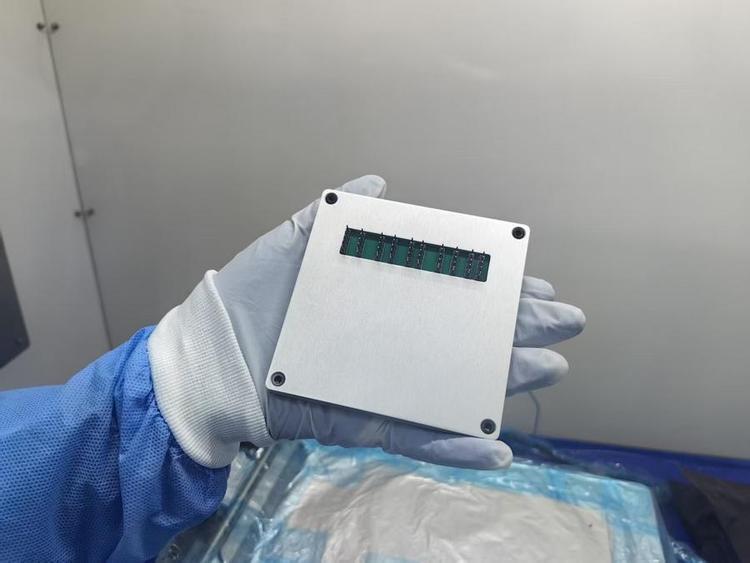
NANJING, March 12 (Xinhua) -- In the latest step to clean energy technology, a Chinese company said that it has developed a prototype of ultra-longevity carbon-14 (C-14) nuclear battery, named Zhulong-1, making progress in the micro-nuclear battery innovation quest.
Wuxi Beita Pharmatech Co., Ltd. which is located in east China's Jiangsu Province, said it made the achievement in collaboration with Northwest Normal University in Gansu Province in the northwest of China.
Nuclear batteries convert radioactive decay energy into electricity, differing fundamentally from conventional chemical batteries. Wuxi Beita has established a whole C-14 industry chain system, covering C-14 labeling products and labeling technologies, laying foundation for developing Zhulong-1, according to the company.
Zhang Guanghui, technology leader of the battery project, who is from Northwest Normal University, told Xinhua on Wednesday that the core innovation of Zhulong-1 lies in the use of C-14, a radioactive isotope with a half-life of 5,730 years, which is paired with a silicon-carbide (SiC) semiconductor to generate power. As C-14 decays, it emits beta particles that interact with the semiconductor, producing a steady flow of electrons.
This approach addresses key technical challenges, including the preparation of high-specific-activity C-14 sources, and the low energy conversion efficiency and stability of transducer devices, said Zhang.
In a live demonstration at Wuxi Beita's laboratory, a Zhulong-1-powered LED has operated flawlessly for nearly four months, sustaining over 35,000 pulsed flashes. Researchers further validated its utility by integrating the battery with a Bluetooth chip -- which successfully transmitted and received wireless signals.
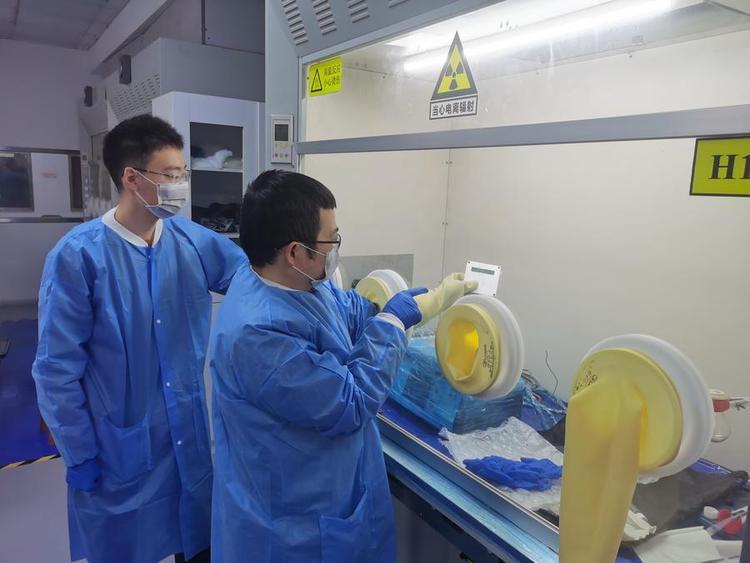
The research team named the battery after Zhulong, the mythical Chinese dragon deity symbolizing eternal light and energy in China's ancient text Shan Hai Jing, reflecting both the richness of Chinese culture and the battery's enduring energy supply characteristics, said Cai Dinglong, head of the battery project.
The battery can operate steadily within a temperature range of minus 100 degrees Celsius to 200 degrees Celsius, with an energy density 10 times higher than commercial lithium-ion batteries, and a degradation rate of less than 5 percent over a designed lifespan of 50 years, said Cai.
The Hefei Institutes of Physical Science under the Chinese Academy of Sciences conducted the battery tests.
Han Yuncheng, a researcher at the Institute of Nuclear Safety Technology, told Xinhua that tests indicate that Zhulong-1's core technological indicators -- including power levels, energy conversion efficiency, and stability -- are advanced.
As a new generation micro-power solution, C-14 nuclear batteries have a wide range of applications in healthcare, the Internet of Things sector and space exploration.
Notably, they can power permanent implants like brain-computer interfaces or cardiac pacemakers and support networks of trillions of sensors for the Internet of Things, Zhang said.
In addition, in extreme environments including the deep ocean, Antarctica, and on the moon and Mars, these batteries can serve as maintenance-free continuous power batteries -- while they can also enable interstellar spacecraft to operate consistently, added Zhang.
The research team is already advancing a second-generation model, Zhulong-2. Cai said that efforts will focus on reducing production costs and shrinking the size.
"Zhulong-2 is expected to be launched by the end of this year or early next year, measuring only the size of a coin," he said.
相關(guān)新聞
資訊分類
電話:0510-81695383
郵箱:chengcaihong@beitalab.com
傳真:0510-81602153
地址:江蘇省江陰市東盛西路70號
郵編:214437
掃一掃訪問公眾號
掃一掃訪問手機官網(wǎng)
Copyright © 2024 貝塔醫(yī)藥科技有限公司 丨 營業(yè)執(zhí)照


